What Should You Complete Before Construction Begins?
1. Verify land ownership documents — Ensure you have the registered sale deed, mutation certificate, and encumbrance certificate. For DDA plots, confirm the lease deed and NOC for construction. Get a title search done by a property lawyer (₹5,000-15,000).
2. Get a soil test done — Soil testing determines foundation type and depth. In Delhi, areas near the Yamuna or in Bawana/Narela may have weak or expansive soil requiring special foundations. Cost: ₹15,000-40,000 from a NABL-accredited lab.
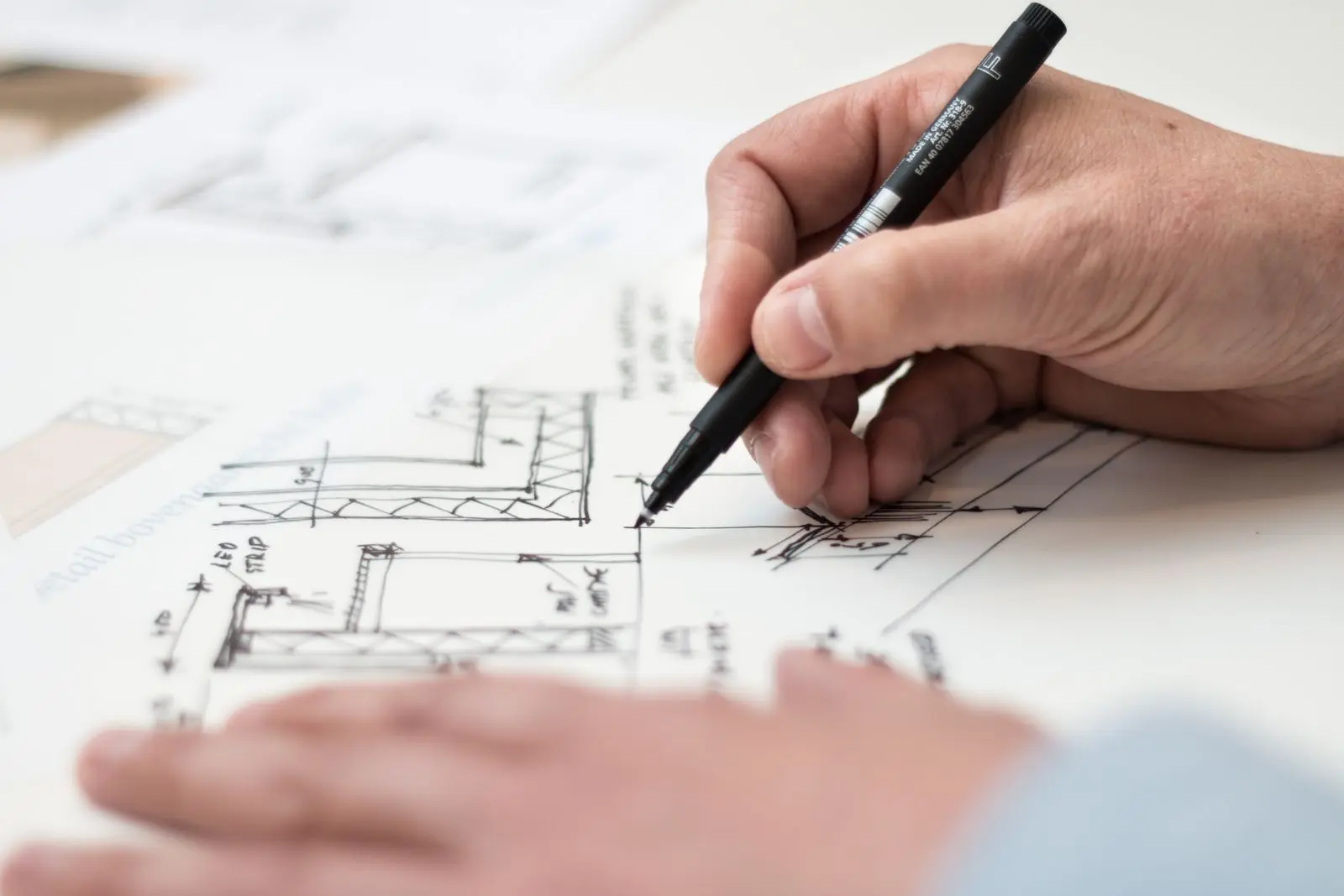
3. Hire a licensed architect — The architect creates building plans compliant with Delhi building bylaws (ground coverage, FAR, setbacks, height restrictions). Cost: 3-5% of construction cost or ₹50,000-2,00,000 for residential projects.
4. Obtain building plan approval from DDA or MCD — Submit architectural drawings to the relevant authority (DDA for DDA areas, MCD/NDMC for their jurisdictions). Approval takes 30-90 days and costs ₹30,000-1,50,000 depending on plot size.
5. Get a structural design from a licensed structural engineer — The structural engineer designs the RCC frame (columns, beams, slabs, foundation) based on soil test results and seismic zone IV requirements. This is legally mandatory in Delhi.
6. Finalise your construction company or contractor — Obtain 3-4 detailed quotations, verify references, visit completed projects, and sign a formal agreement with scope, timeline, materials (with brand specifications), and payment milestones.
7. Arrange construction finance — If taking a home construction loan, note that banks disburse in stages linked to construction progress. Have at least 20-30% of the estimated cost as readily available funds for the initial stages.
8. Apply for temporary water and electricity connections — Construction requires temporary utility connections from Delhi Jal Board and BSES/Tata Power. Apply 2-4 weeks before start. Cost: ₹10,000-25,000.
9. Inform neighbours and RWA — For plots in cooperative societies, obtain RWA permission for construction. Some societies restrict construction hours and require deposits for common area damage protection.
10. Set up site security and storage — Arrange for secure storage of materials (especially cement, steel, and fittings) and basic site security to prevent theft. Material theft at construction sites is common in Delhi.
What Should You Check During Construction?
1. Foundation inspection — Verify excavation depth matches structural drawings. Check PCC (plain cement concrete) thickness and curing. Inspect reinforcement bar diameter, spacing, and lap length before concrete pour. Ensure foundation waterproofing membrane is applied. This is the most critical checkpoint — foundation errors are irreversible.
2. Plumbing rough-in — Verify pipe routing, diameter, and gradient before walls are plastered. Check that hot and cold water lines are correctly positioned, drainage slopes are adequate (minimum 1:40), and vent pipes are included. Pressure-test all water supply lines at 6 kg/cm² for 30 minutes.
3. Electrical conduit and wiring — Inspect conduit routing before plastering. Verify wire gauge (4mm for AC/geyser, 2.5mm for power, 1.5mm for lighting), MCB ratings, earthing system, and switch board positions. Ensure conduits have pull wires for future maintenance.
4. Column and beam reinforcement — Before every concrete pour, verify rebar diameter, stirrup spacing, cover blocks, and lap lengths against structural drawings. This is non-negotiable for seismic zone IV compliance in Delhi.
5. Slab reinforcement and shuttering — Check slab thickness, steel placement (top and bottom), shuttering level accuracy, and ensure adequate props and supports. Concrete cube test samples must be taken from every pour for 7-day and 28-day compressive strength testing.
6. Brickwork and wall alignment — Verify plumb (vertical alignment), course height consistency, and mortar joint quality. If using AAC blocks, check adhesive application and block alignment. Lintels above every opening must match structural specifications.
7. Waterproofing application — Inspect waterproofing at every wet area (bathrooms, kitchen, balcony) and at roof level. Verify membrane type, overlap joints, and conduct a 48-hour water ponding test before tiling. This prevents the most common post-construction complaint in Delhi — leakage.
8. Plastering and pre-finishing checks — Verify plaster thickness (12-15mm internal, 15-20mm external), surface flatness, and corner angles before painting. Check window and door frame alignment, level, and plumb before proceeding with finishing.
What Should You Verify After Construction?
1. Final walkthrough and snagging — Conduct a room-by-room inspection noting defects: cracks, uneven surfaces, non-functional switches, leaking taps, misaligned tiles, and paint imperfections. Prepare a snagging list with photographs and set a deadline for rectification.
2. Systems testing — Test all electrical circuits, verify MCB tripping, test all plumbing fixtures for flow and drainage, check geyser and water pump operation, and verify that earthing resistance is below 5 ohms. Run the complete system under load for 24 hours.
3. Warranty documentation — Collect structural warranty certificate, material warranty cards (tiles, fittings, paint), and equipment warranties (water pump, geyser, MCBs). Ensure the main construction warranty specifies duration, coverage, and claim process.
4. Obtain occupancy certificate — Apply to DDA/MCD for the occupancy certificate (also called completion certificate). This certifies the building was constructed as per approved plans. Without this, you cannot get permanent utility connections or legally occupy the building.
5. Apply for permanent utility connections — With occupancy certificate in hand, apply for permanent electricity meter, water connection, gas connection, and sewage connection. Costs: electricity ₹15,000-30,000, water ₹10,000-20,000, gas ₹5,000-10,000.
6. Property mutation and tax registration — Register the construction completion with the revenue department, update property mutation records, and start paying house tax. Also update your property insurance to cover the constructed structure.
What Are the Delhi-Specific Requirements You Must Know?
DDA building bylaws govern ground coverage (maximum 75% for plots up to 100 sqm, 65% for 100-500 sqm), FAR (floor area ratio varies by zone and plot size), mandatory setbacks (front, rear, side), and maximum building height. Violations result in demolition notices and heavy penalties.
Delhi falls in seismic zone IV (high damage risk zone). All structures must comply with IS 1893:2016 for earthquake-resistant design. This mandates specific column sizes, stirrup spacing, beam-column joint detailing, and foundation design. A structural engineer's certification is legally required.
Fire NOC from Delhi Fire Service is mandatory for buildings above 15 meters (approximately G+3). Requirements include fire-resistant materials, emergency exits, fire extinguisher provision, and adequate road width for fire engine access.
MCD/NDMC sanction is required before construction. The approval process involves submitting architectural drawings, structural drawings, soil test report, and land ownership documents. Digital submission through the e-Nagar portal has reduced processing time to 30-45 days for straightforward cases.
Environmental clearance from DPCC (Delhi Pollution Control Committee) is required for projects above a certain built-up area or for commercial construction. Construction and demolition waste management rules require proper disposal through authorised agencies — dumping construction debris is illegal and attracts penalties up to ₹5 lakhs.